
A leading scientist's career path with Max Holmes
Max is President of the Woodwell Climate Research Center, one of the world’s leading climate science organizations focused on solutions at the nexus of climate, people, and nature.
This interview with Max Holmes has some great advice about what it takes to lead and ways to break into the field and make a difference.
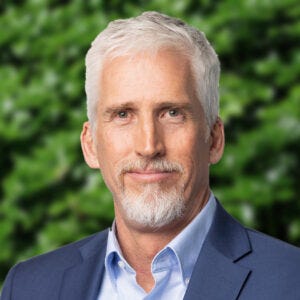
Max joined Woodwell as a scientist in 2005, and served as Deputy Director for five years prior to becoming President and CEO in 2021. In his role, he is a sought-after speaker at venues ranging from TEDx to Davos to Mountainfilm Festival, and and is regularly quoted by top news outlets including The Washington Post, The New York Times, The Boston Globe, and The Independent. He previously served as director of the U.S. National Science Foundation’s Arctic Systems Science Program, was elected National Fellow of the Explorers Club in 2015, and served on the 2022 Earthshot Prize host committee. Dr. Holmes is a widely cited earth scientist who has co-founded and led multiple large river research networks, including Global Rivers Observatory, Arctic Great Rivers Observatory, and the Cape Cod Rivers Observatory. He is also a co-founder of Science on the Fly, an initiative that unites the fly-fishing and science communities to study and protect rivers around the world.
“But I do know that in the mid to long term, we're going to need more and more people focused on these climate issues — whether it’s as a scientist or in all the different areas and all the different sectors of the economy that will need to change.”
James Socas
We’re here today with Max Holmes, who is sitting in his lovely office in Woods Hole, Massachusetts. Max is President of the Woodwell Climate Research Center, which he'll tell you a little bit more about. My co-host Rob Griffen and I will ask Max for a couple of insights on how he got involved in climate, the impact that he's having, and any advice that he has for people starting out in their careers.
So on that note, Max, did you grow up interested in nature? Were you always interested in science?
Max Holmes
Thanks Rob and James. Well, I was born in San Francisco, but both my parents were from the Midwest. When I was a year old we moved to Michigan, and I was there until I was 15, and then we moved to Texas. So I've had influences from a variety of different places, but my formative years as a young kid were in northern Michigan.
As a kid I used to head outside and hike around in the woods and streams and go out on Lake Michigan. I particularly loved to fish. I would fish with my father and my grandfather, and if they weren't available, I’d fish by myself or with friends or whoever was available. That led to a real appreciation for the outdoors, for nature, for ecosystems, although, of course, I didn't learn that word until much later. So, yes, I always had a love of the outdoors and of nature.
I didn't come from a family of scientists, but my mother had a childhood friend who was a “stream ecologist.” What I knew about him was that he worked on trout streams in Montana. I never knew that it was a possibility to work on trout streams in Montana as a job, and that had a huge influence on me. If I didn't have that sort role model — or picture in my mind — I probably would not be doing what I'm doing now.
James
So in college did you start out focused on science? Or did that role model change your college program as well?
Max
I was a biology major as an undergrad, and I didn't know what I wanted to do. Every couple of weeks I would have a different idea. After my freshman year I moved from the University of Colorado to the University of Texas. I ended up doing really well in my grades, and everyone started asking me, why aren't you pre med? Why aren't you going to be a doctor? And that made me think, that must be the cool thing to do. So for a while I was pre med, which doesn't mean a heck of a lot. But I did take a lot of courses in cell biology and genetics and that kind of stuff.
My senior year in college was the first ecology class I took, and the professor was Eric Bianca who was an ornery old ecologist who did amazing work. He really conveyed to me the urgency of understanding what's going on in the natural world and using that understanding to help protect things for the future. So that professor changed my course, and I no longer said I was pre med. I became more focused on doing something that would be in the environmental space, which is back to what I imagined when I was a little kid.
I will tell you a quick story. As a kid, people always ask you “what do you want to be when you grow up?” And I had two answers, which would vary in priority from time to time. One was to be a private detective, which was probably based on some TV show I was watching at that time. That seemed like a cool thing to do. But the other one was this big word that nobody knew, but it was what the family friend that I told you about earlier who studied trout streams in Montana was. I'd say I want to be a “limnologist,” which is a freshwater ecologist.
So back to my answer, it was really that course that I took in the final semester of my senior year — the evolutionary ecology course — that in many ways got me back on the track I had imagined years before.
James
Very interesting how that professor helped get you back to your dreams. And how did you then get to Woodwell?
Max
I did my PhD in Arizona, and I studied stream chemistry and hydrology in a mountain desert in Arizona, specifically studying nutrient cycling and nitrogen. I finished my degree in 1995 and back then you didn't go online to look for jobs like you do now, you looked in the back of scientific journals. And one day I saw an ad for the Marine Biological Laboratory in Woods Hole to work on nitrogen cycling and estuaries.
I remember the ad listed four key qualifications they were looking for. One was that you needed to know something about estuaries, and I knew almost nothing about estuaries. Two was knowing something about nitrogen cycling, and I checked that box. Three, you needed to know something about using stable isotopes and ecological research, which I also didn't know anything about. And four, the person had to work well in a collaborative research environment. So it seemed like a long shot, but I applied, and somehow I ended up with the job.
I became a postdoctoral scientist at the ecosystem center at the Marine Biological Laboratory, and I imagined that I'd be there for a couple of years, and then head out to a university as a professor. But I ended up staying there for 10 years, and then in 2005 I had the chance to move a couple miles up the road to what was then called the “Woods Hole Research Center” and which has been renamed the “Woodwell Climate Research Center.” [In honor of the pioneering climate scientist George Woodwell.]
I came to Woodwell as a scientist in 2005 and then spent five or six years as deputy director, and now I'm in my fourth year as the President of the organization. The town of Woods Hole [Massachusetts] in general is an amazing place to do science — there are several different institutions here that cross-pollinate and form a collaborative community — and I've been here now about 30 years. I made the jump to the Woodwell Climate Research Center because I thought it was a place where there were really good scientists, doing really important work, but with a big emphasis on connecting that science to impact policy to make a difference. Meaning don't just study the problem of climate change, but work on the solutions for climate change.
James
Max can you help people understanding the difference between going to a university as a scientist or to a place like Woodwell, or a Rocky Mountain Institute, Copernicus or Potsdam in Europe.
Max
Yes. If you're a professor at a university, obviously a big part of your job is that you are a teaching students, you're educating. You may end up as part of a pretty big bureaucracy as well depending on the university. You're also doing your own research, often really important research.
We do a lot of that here, but we are an independent nonprofit “research first” organization, so we don't have students of our own. We do often have visiting students or advise graduate students, but our staff, our scientists, are not tasked with spending months per year teaching. That means they have more of their time to focus on research and connecting that research to impact, which is our mission.
James
Thanks. To shift slightly to what it is like working at Woodwell or a similar institution, how should someone think of day-to-day life on the job?
Max
We're about 150 people overall. When I was hired, there were about 38 people, but we’ve grown a lot. The day-to-day job depends a lot on the person and their role. About half of our people are based here in Woods Hole. The other half are spread around the country and around the world. Some people are out in the field, conducting field research. That could be in the Arctic. It could be in the Tropics. You might be studying permafrost or studying agricultural soils. You might be studying in the Amazon. Then there are also all the important jobs that support how we operate as an organization, as a business. Accountants, finance people and facilities roles and on down the list. Then we also have people out raising funds to keep things running.
That means there are all kinds of different ways to contribute to a place like Woodwell, with people coming from all different backgrounds. Our scientists are PhD level, sort of permanent scientists. They'll spend most of their time doing our research, writing about it, and talking about it. They'll spend time in DC to try to influence people with power to make wise decisions that are based on the science.
For us there’s not a typical day, but it can be a whole range of activities going on, and that's something that keeps me excited. There's plenty to do, and that's never been more true than now.
James
That’s interesting to hear how someone interested in having an impact by working with Woodwell has lots of ways to do it. You can be a scientist, but you can be an accountant, or you can help with operations. Lots of different angles to get engaged.
Max
That's right, and that holds not just for Woodwell, but for lots of organizations and people who want to make a difference on climate change. You can have all kinds of different jobs and career paths and make a difference. It’s figuring out something that excites you, something that you're pretty good at, and going down that road and using those skills to make a difference.
I was reflecting this morning about somebody who's taken an incredibly different path than I have, but who will have a really big influence, Conrad Anker — who’s an absolutely legendary mountain climber, one of the gods of climbing. He's going to be visiting Woodwell for a couple of days. He has a big following and a big voice, and he thinks a lot about climate, and wants to help. He wants to use his voice for good, and so I'm excited about him getting more connected to Woodwell. That's just one example of somebody in a totally different space who can make a big difference on these issues. And it's an example of a unique partnership, and an important partnership, that we like to do.
Rob Griffen
Max, I want to pick up on that idea of collective action to address climate issues. For somebody who's embarking on a career in climate and sustainability and thinking about where to work and who to work with, how do you think about working with the private sector, with governments and with other organizations? If you're a person starting out in the field, what seem like good places to start?
Max
All those are good options. I'll say that over the last five or six years, we've had a partnership with Wellington Management, the big asset management firm, that's been incredibly important for us, and I think very influential and impactful. If you would have told me 10 years ago that I would have been spending a lot of my time talking to asset managers and thinking about the financial industry, I would have thought you were crazy. But as I've done that, I recognize that I was naive before, because the direction that money flows has huge influences on the direction that society flows and what happens with climate change. So getting the financial industry and finance aligned with climate action is critical, and anything that anyone can do to nudge it in the right direction is incredibly important.
Not everybody needs to end up in the nonprofit space, or doing climate research at a university, to make a really big difference with respect to climate change. There are lots of different things people can do, and we need lots of different people, different sorts of people doing it. The government is, of course, an incredibly influential place for people to work, whether that's as scientists or as elected officials.
It is an interesting time to have this conversation, because, as you know, if you're a federal scientist working on climate change right now, your job is in jeopardy, and people are already losing their jobs. Incredibly good people are being forced out of the government. I think that is a terrible shame and terribly short sighted, but I hope and expect the tide will turn. We need really good people in the federal government doing the really good work that they've done for a long time, but we are definitely going through a difficult time right now.
If federal funding for climate science and climate research continues to take the hits that some in power want it to take, that will have bigger impacts, heightened impacts, here in Woods Hole and across the country and even globally. It's going to slow progress on finding solutions to the incredibly urgent issue of climate change.
Rob
Thanks Max, and on a related question. I read your recent post about how some people appear to be playing turtle right now, and hiding from doing things in support of decarbonization publicly. If you're somebody starting out in this field, how should you think about the political cross currents, and how should that affect your career choice and options?
Max
That’s a very good question, and I don't know what the right answer is in the very short term. But I do know that in the mid to long term, we're going to need more and more people focused on these climate issues — whether it’s as a scientist or in all the different areas and all the different sectors of the economy that will need to change.
In the short term, unfortunately, there is going to be a large group of climate scientists out of jobs, and that certainly creates headwinds for young people out looking for jobs. I don't want to discourage anybody from going into this field, because we're going to need them. There is no doubt in my mind that we need our best people working on these issues. But, yes, there's no getting around the fact that this is a really tricky, uncertain time.
Rob
Thank you. James, back to you.
James
Thanks. Max, on the comment you made about the long term direction, why do you think people are not more focused on some of the data that we are seeing. The numbers are startling on ocean temperatures, annual emissions, or the recent jump in warming levels. Why is that not resonating more?
Max
I get asked that question a lot, and I don't have a good answer. If I go back 20 years or so, or even longer ago, when I started in this field as a scientist, we could see climate change in the data. The challenge was that most people didn't see it in their day to day lives. They weren’t reading about it in the news headlines about things happening around the world each day.
But there's been a really dramatic shift in the last five to 10 years, where all the changes we saw coming from climate change are becoming more and more visible in daily life. You certainly see it in the headlines and what's happening around the world.
If you would have asked me, is that change going to wake people up and cause us to change direction and do what we know we should do to put the brakes on climate change? I would have said, of course it will. But it hasn’t yet. And not to the degree it needs to.
That's not to say there aren't really good things happening. There are lots of really good things happening that don't get as much focus as they need to. But stepping back more broadly, are governments doing all that they should be doing? Are some governments now going in the wrong direction? I don’t have an explanation for that, but I continue to be hopeful that eventually we're going to get to where we need to get to. It will not be easy but the path is there to get to a good place. It's uncertain if we will get there, but it is certain that we can get there if we want. And that's what keeps me motivated.
I'll often get a question along the lines of, is it too late? Because if you're just reading the headlines about climate change, you can get that message that it is too late. And so I want to say emphatically, that it is not too late. Yes, there are big impacts of climate change right now. There will be bigger impacts tomorrow and five years from now, but it's not game over.
The kinds of things that we do now, that young people can do now, that young people can do in their careers, are incredibly important for creating the pathway to ending up with a world that we all want to live in, that we want our kids and grandkids to live in. And even generations farther down. So what we do now, what we do at the Woodwell Climate Research Center, what people do around the world working on these issues is incredibly important, even if the victories aren't coming as quickly as would like them to come.
James
There is a lot to think about in what you just said. To try to bridge over the current period we may be in for a younger person, your point is that the scale of the change needed is going to require more and more good people — and, yes, we're going to have these blips like we may have right now — but the trend is what it is.
Max, to end on two more general questions. The first is whether there is any advice that you got or that you would give people starting out in the field about how to be successful? Career advice, life advice.
Max
I’ll say to keep an open mind about life’s pathways. I have some colleagues and friends that from the time they were in college or before knew where they wanted to end up, and they ended up there, and that's great. But that's not how it's been for me. I've taken some tangents but I've always kept an open mind and looked for opportunities and looked for a way to make a difference. What's worked for me, and I think what is an important element for other people, is finding something that excites you, that you enjoy doing, because it's not easy. You're going to need to work hard. So find something that you find fulfilling. And you know, for me, broadly it's making a difference, trying to have a better world, and pass on a better world. So follow your passion and lean into that.
James
Within climate and sustainability, is there an area that you think is or will be particularly exciting, if you were giving someone advice on where to focus?
Max
Well, I love our combination at Woodwell of a bedrock of science, and a mission of connecting that to real world impact, and I think that sets us apart and makes us special. But I also love the work that many people are doing on new technologies. There's some really cool stuff happening out there, some of it won’t work and some of it has to work. In that area you can be a technology expert, an entrepreneur, an investor. I also think government relations is incredibly important right now. We have someone who has been in DC for a long time, and what she does is something I have come to really appreciate — understanding how Congress works, and how to nudge things in the right direction.
James
Those are all terrific ideas. So here is truly the last question, is there a book or movie that you would recommend, maybe on climate, or in your own life that was very impactful, that you would tell people to check out?
Max
I am going to choose two. In the climate space, I would choose “Ministry for the Future.” It's climate fiction, but relatively near term climate fiction. The author, Kim Stanley Robinson, does an amazing job on the research front. He really understands how the political community works, how international climate negotiations work. When it came out five years ago, it was very influential in my thinking, and it expanded my thinking about the longer term and how we might get to a good place eventually.
Another book that that I've been looking at over the past few weeks is called, “On Tyranny.” It’s a very short book, written by a professor at Yale, with 20 lessons about tyranny from the 20th century. The first two that he focuses on, and which I've been thinking a lot about lately, is “Do not obey in advance.” And the second is, “Defend institutions.” I remind myself of those things on a daily basis, as climate scientists and the climate space in general are under threat at exactly the wrong time. And also recognizing that some of the institutions that we depend on in the federal government and elsewhere are being threatened.
James
Those are both great suggestions. Max, thank you. You're doing such great work, such important work. Thank you for the time here. We'll look forward to seeing you in Washington or New York or fly fishing somewhere.
Edited for Clarity